Backpack size chart
Typical backpack dimensions and volumes by use, how to measure a backpack, how to size one for a child, and the specifications a factory needs to quote your backpack.
On this page
Backpack sizes at a glance
There is no single official backpack size. The ranges below are what most backpacks on the market fall into, measured on the outside of the bag (height × width × depth). Use them as a starting point for your own design, then set exact measurements on your spec sheet.
| Backpack type | Height | Width × depth | Volume |
|---|---|---|---|
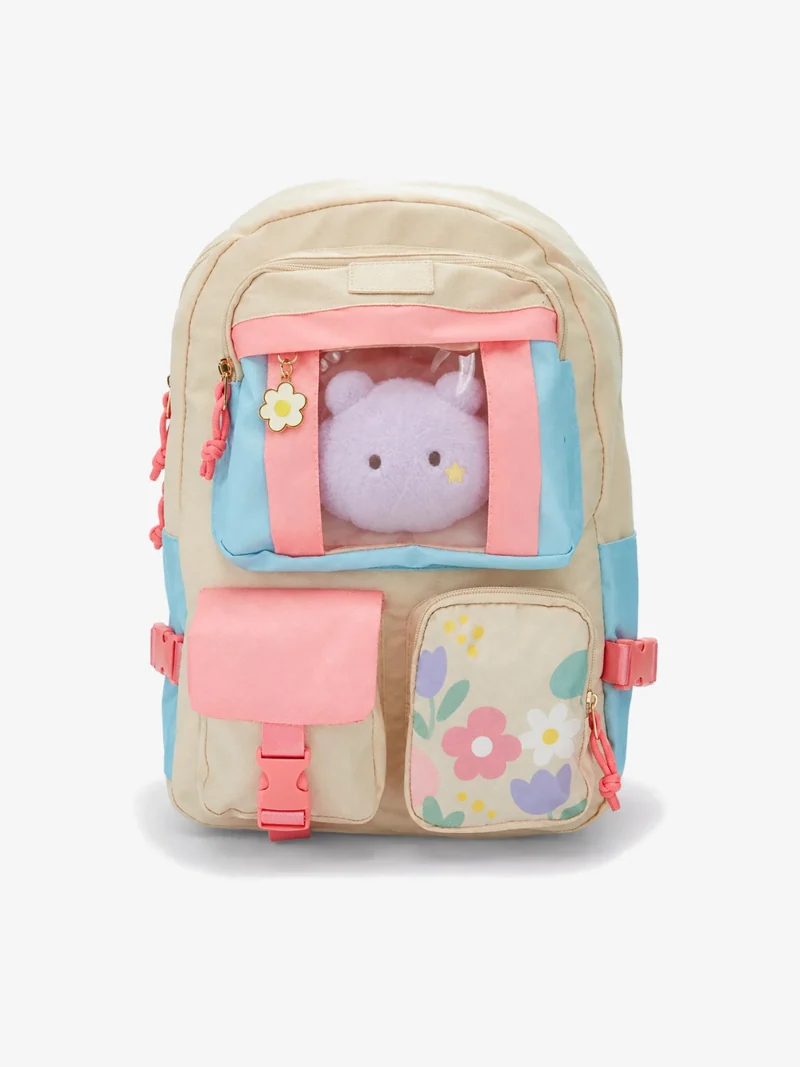
| Mini fashion backpack | 20–28 cm (8–11 in) | 17–23 × 8–11 cm (6.7–9.1 × 3.1–4.3 in) | 3–7 L |
| Toddler and preschool (ages 3–5) | 25–32 cm (10–12.5 in) | 20–25 × 9–12 cm (7.9–9.8 × 3.5–4.7 in) | 5–9 L |
| Primary school (ages 6–10) | 35–40 cm (14–16 in) | 26–30 × 12–15 cm (10.2–11.8 × 4.7–5.9 in) | 12–18 L |
| Middle and high school | 42–47 cm (16.5–18.5 in) | 29–33 × 14–18 cm (11.4–13 × 5.5–7.1 in) | 20–30 L |
| Everyday and commuter | 42–48 cm (16.5–19 in) | 28–32 × 12–17 cm (11–12.6 × 4.7–6.7 in) | 18–28 L |
| Laptop backpack (up to 15.6 in) | 44–48 cm (17–19 in) | 30–33 × 14–20 cm (11.8–13 × 5.5–7.9 in) | 20–30 L |
| Travel and carry-on (see personal item size by airline) | 50–56 cm (20–22 in) | 34–40 × 20–23 cm (13.4–15.7 × 7.9–9.1 in) | 35–45 L |
The answer to “what is a standard backpack size” for most adults is the everyday row: about 45 × 30 × 15 cm (18 × 12 × 6 in), roughly 20–25 litres.
How to measure a backpack: length, width and height
- Height (often called length): from the base to the top of the main body, with the bag standing and lightly filled. Top handles are not included.
- Width: across the widest part of the front panel.
- Depth: front to back at the deepest point, including the front pocket but not the shoulder straps.
- Volume (litres): brands quote it differently. Multiplying height × width × depth in centimetres and dividing by 1,000 gives the box size, which overstates a bag with rounded corners. Many brands fill the bag with small balls or beads and measure what it holds. State which method you use.
- Weight: the empty bag, in grams, with all removable parts.
On a production spec, every measurement also gets a tolerance, commonly ±0.5 to ±1 cm for soft bags. Agree it before the first sample, not after bulk.
Kids backpack sizes by age
A child's backpack should fit the child's back, not their school year. A common rule of thumb is that the bag should not be wider than the child's torso, its top should sit below the shoulders, and its base should sit at or just above the waist.
Weight matters more than size. Paediatric guidance republished by KidsHealth advises that a loaded pack should weigh no more than 10–20% of the child's body weight: for a child of 36 kg (80 lb), that is about 3.5–7 kg (8–16 lb). Design features that help are two wide, padded shoulder straps, a padded back panel, and a chest strap or waist belt on larger school bags.
For ranges sold to retailers, brands usually make one toddler size (about 30 cm), one primary size (about 38 cm) and one senior size (about 43–45 cm), sometimes in the same artwork.
Laptop backpack sizing
Laptop sizes are screen diagonals, so the device itself is larger than the number suggests. Always design the sleeve around the outer dimensions of the device, plus room for the sleeve's own padding:
| Laptop class | Typical device footprint | Inner sleeve to aim for |
|---|---|---|
| 13–14 in | 30–32 × 21–23 cm | about 33 × 24 cm |
| 15–15.6 in | 34–36 × 23–25 cm | about 38 × 27 cm |
| 16–17 in | 36–40 × 25–27 cm | about 41 × 29 cm |
Raise the sleeve a few centimetres off the base with a false bottom or foam, so the laptop does not take the impact when the bag is set down.
Backpack specs a factory needs
When people search for “backpack specs” they usually want a list like this. It is also what a factory needs to give you an accurate quote and a first sample:
- Outer dimensions (H × W × D) and tolerance; target volume and how it is measured.
- Main fabric (fibre and weight or denier, for example 600D polyester), coating, and colour references.
- Lining, padding (foam type and thickness in the back panel, straps and laptop sleeve) and any stiffener in the base.
- Number and position of compartments and pockets, with their sizes.
- Zips: type and size (for example #5 or #8 coil), slider and puller style.
- Shoulder strap width, padding and adjuster hardware; chest strap or hip belt if any.
- Branding: logo method (embroidery, print, patch, rubber badge, metal plate), size and position.
- Labels, hangtags and packaging; target empty weight; order quantity per colour.
Our bag tech pack template turns this list into a document you can send, and the parts of a backpack guide gives the names factories use for each part.
Making backpacks to your size
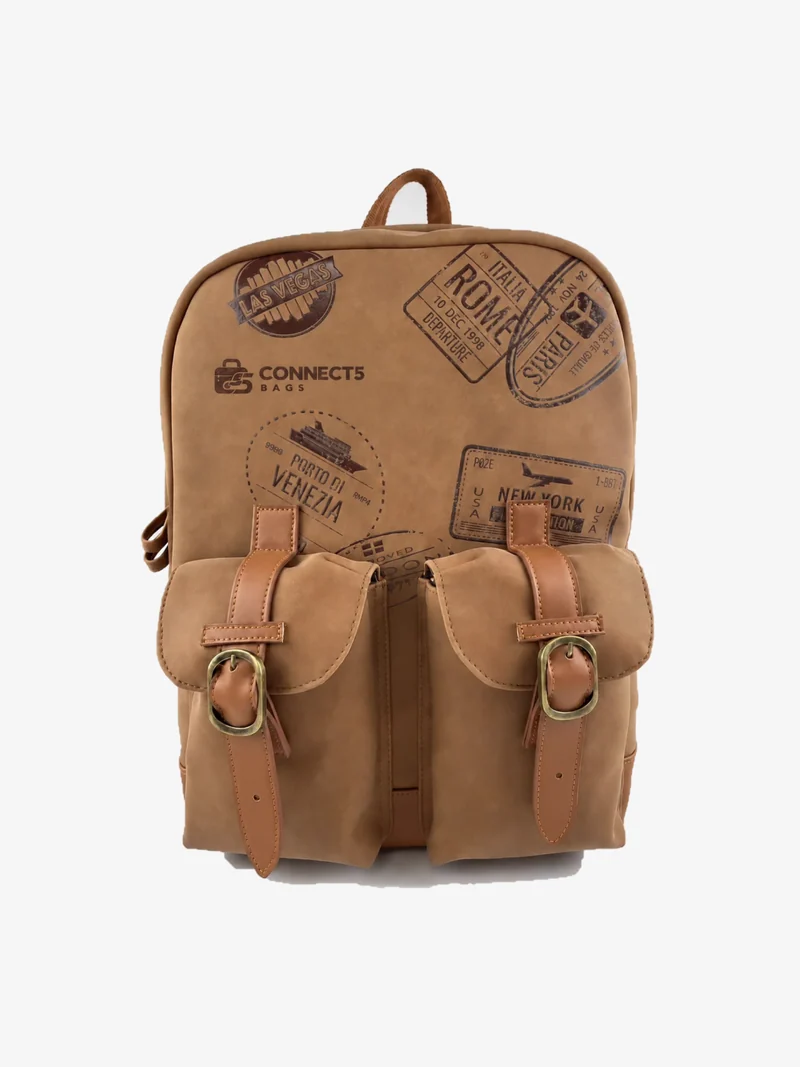
Connect5 makes backpacks for brands at factories in Guangdong, China and Phnom Penh, Cambodia. Every style in our back-to-school backpack and men's backpack collections can be developed to your own dimensions, materials and branding. Email the style name, your target size and quantity, and we will reply with questions or a proposal.
Questions buyers ask
What are the dimensions of a regular backpack?
Most everyday adult backpacks measure about 42–48 cm tall, 28–32 cm wide and 12–17 cm deep (about 17–19 × 11–13 × 5–7 in), which holds roughly 18–28 litres.
What is the standard backpack size in inches?
About 18 × 12 × 6 in (height × width × depth) for an everyday adult backpack. School backpacks run about 16.5–18.5 in tall, and kids’ backpacks for ages 6–10 about 14–16 in.
How do you measure the length, width and height of a backpack?
Stand the bag up lightly filled. Height (or length) runs from the base to the top of the body, width across the widest part of the front, and depth from front to back including the front pocket but not the straps.
What size backpack fits a 15.6 inch laptop?
Look for an inner laptop sleeve of about 38 × 27 cm. Backpacks built around one are usually 44–48 cm tall and hold 20–30 litres.
How big is a 25 litre backpack?
About 46 × 30 × 18 cm (18 × 12 × 7 in): a typical everyday or school backpack that holds a 15 inch laptop, books and a jacket.
How heavy should a child's loaded backpack be?
Paediatric guidance advises no more than 10–20% of the child's body weight, so about 3.5–7 kg for a child who weighs 36 kg.
How do you calculate a backpack's volume in litres?
Height × width × depth in centimetres divided by 1,000 gives the box volume. Because bags have rounded corners, many brands measure what the bag holds with filler instead. Say which method you used.